
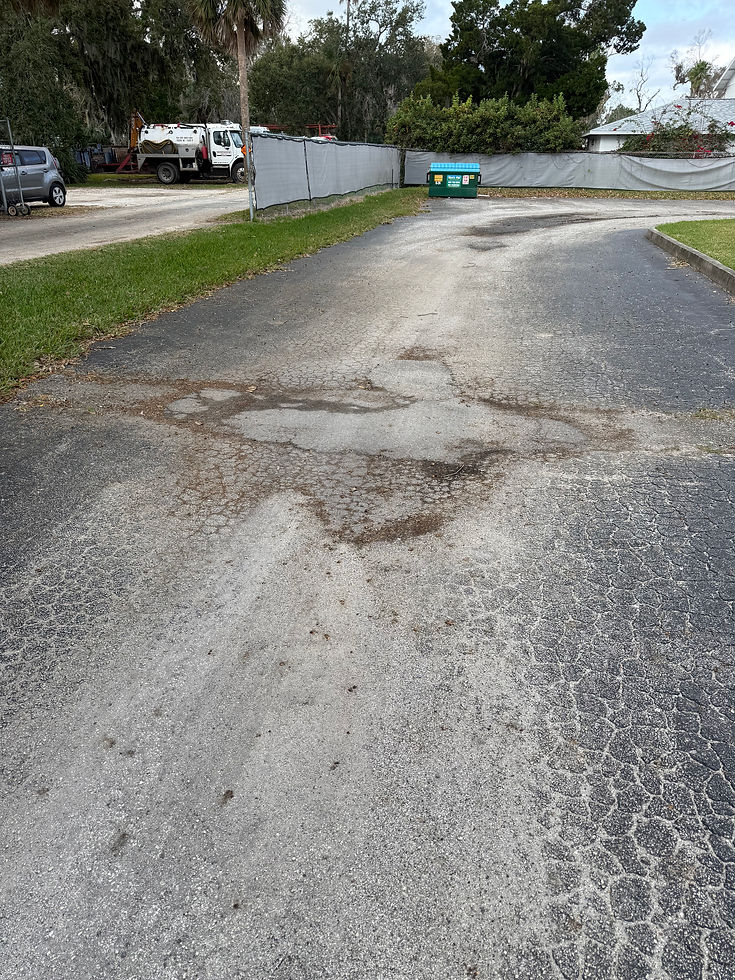
Compaction Explained: Why It Makes or Breaks Your Driveway
The one step most homeowners never ask about — and the reason driveways crack, sink, and fail early
If you’re planning an asphalt driveway, you’re probably thinking about the obvious stuff:
How much it costs
How long it takes
How thick the asphalt will be
Which contractor to hire
But there’s one thing that matters just as much as all of that — and most homeowners don’t even know to ask about it:
Compaction.
Compaction is what turns a driveway from “fresh asphalt on top” into a driveway that actually holds up.
If compaction is done right, the driveway lasts.
If compaction is rushed or skipped, you get problems — fast.
Let’s break it down in homeowner terms.
What Is Compaction?
Compaction is the process of packing materials tightly so they’re stable and strong.
In paving, you’re compacting two things:
✅ The base (stone/gravel underneath)
✅ The asphalt (the top layer you drive on)
The goal is simple:
Remove air gaps, lock everything together, and create a solid surface that won’t shift.
Because when asphalt or base material isn’t compacted properly, it still has space to move.
And when it moves… it cracks.
Why Compaction Matters So Much
A driveway fails for one main reason:
It moves.
Movement causes:
cracking
sinking
separation at seams
weak edges
low spots that hold water
A properly compacted driveway resists that movement.
That’s why compaction is one of the biggest differences between:
✅ a driveway that lasts 15–25 years
and
❌ a driveway that looks good for 6 months then starts falling apart
Compaction Starts With the Base (Not the Asphalt)
Homeowners focus on the asphalt because it’s what you see.
But your driveway is like a house:
The asphalt is the “roof.”
The base is the “foundation.”
If the base isn’t compacted correctly, your driveway will develop:
soft spots
dips and waves
sinking in tire paths
edge failures
cracking patterns that spread quickly
This is why contractors who “just pave over it” are a risk — because the base problems don’t disappear.
How Asphalt Gets Compacted
After the asphalt is laid, it needs to be compacted using a roller.
Rolling does 3 main things:
✅ compresses asphalt to the right density
✅ creates a tight, smooth finished surface
✅ adds strength and durability
Important: timing matters
Asphalt has to be rolled while it’s still hot and workable.
If the crew waits too long, the asphalt cools and becomes harder to compact — and you end up with a weaker driveway.
Signs Compaction Was Done WRONG
Even if the driveway looks smooth, you can still spot compaction issues later.
Here are common warning signs homeowners see:
❌ Cracks showing up way too early
If cracking happens within the first year or two, that’s not “normal settling.”
That’s usually poor base prep and/or weak compaction.
❌ Tire track grooves or waves
Driveways shouldn’t ripple under normal vehicle weight.
❌ Soft spots or sinking
If areas sink after rain or change seasons, the base wasn’t stable.
❌ Edges crumbling
Bad compaction at edges or no edge support can cause breakdown early.
❌ Water starts pooling
If the surface settles unevenly, the pitch changes and low spots form.
“Looks Good Today” Doesn’t Mean It Was Built Right
Here’s the trap:
A driveway can look perfect the day it’s installed…
even if compaction was rushed.
Then over time:
it loosens up
shifts
cracks
settles
fails
That’s why homeowners say:
“It looked great at first… then it went downhill.”
And that’s almost always a compaction/base issue.
What A Good Contractor Does Differently
A quality paving contractor takes compaction seriously.
They:
✅ prepare and compact the base properly
✅ avoid paving over soft spots
✅ use the right roller
✅ roll at the right time (while asphalt is hot)
✅ roll enough passes for strength
✅ pay attention to edges and transitions
Bad contractors rush because compaction takes time — and time costs money.
Questions Homeowners Should Ask About Compaction
If you want to protect yourself, ask this before hiring:
✅ How are you preparing and compacting the base?
✅ Will you fix soft spots or just pave over them?
✅ What roller will you use on the job?
✅ How do you make sure the asphalt is compacted before it cools?
✅ Will the edges be compacted and supported properly?
If a contractor gets annoyed by these questions or can’t answer clearly — that’s a red flag.
The Bottom Line
Compaction is what turns asphalt into a driveway that lasts.
You can have:
good asphalt mix
good thickness
a good-looking finish
…but without solid compaction, your driveway is just one season away from cracking and settling.
Compaction doesn’t make the driveway prettier.
It makes it survive.
Want a Driveway That Holds Up?
At Not Another Paving Company, we don’t pave driveways — and we don’t sell your information to five or six contractors and leave you guessing.
We professionally assess your driveway and match you with the right local contractor based on the things that actually matter — like base prep, grading, thickness, and compaction.
✅ No spam calls
✅ No guessing
✅ Better contractor matching
✅ Less risk of setbacks and issues


Comments